Although I am not a pastor and did not attend seminary, I regularly use several sources and tools that the “average Joe” may not have, and these help me write posts on how a person becomes saved and how a saved person should live. I thought I’d briefly share with you what these are and the process I follow to write a post (in case you are interested that is…).
Resources
Below are three images.
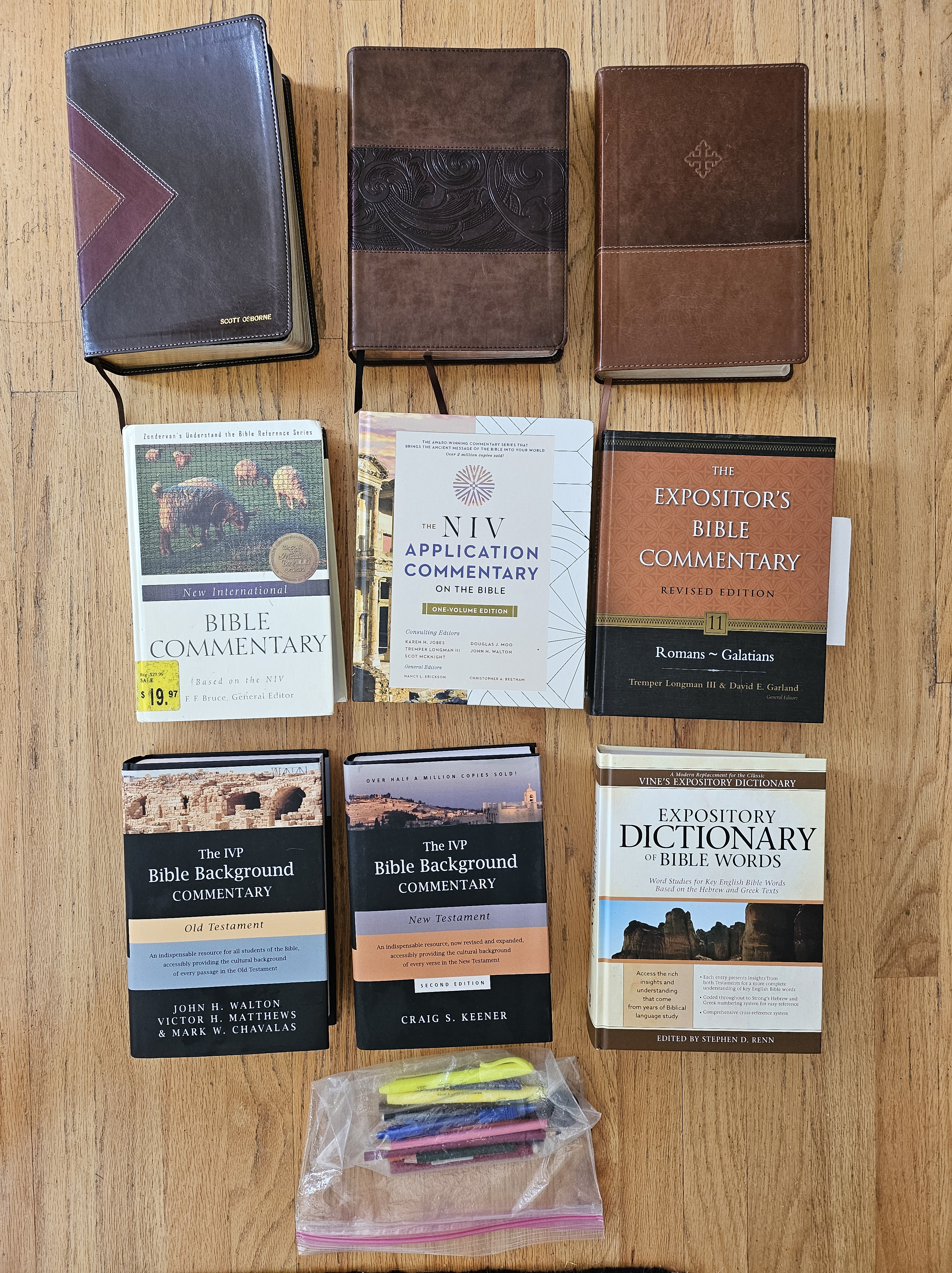
In the first image below, the top row are the three Bibles I typically use. From left to write they are the New Living Translation (NLT Illustrated Study Bible), Christian Standard Bible and the Amplified Bible. I periodically consult the NAS and NIV translations, and sometimes the NKJV. I find the notes in the NLT Illustrated Study Bible and Christian Standard Bible to be quite helpful.
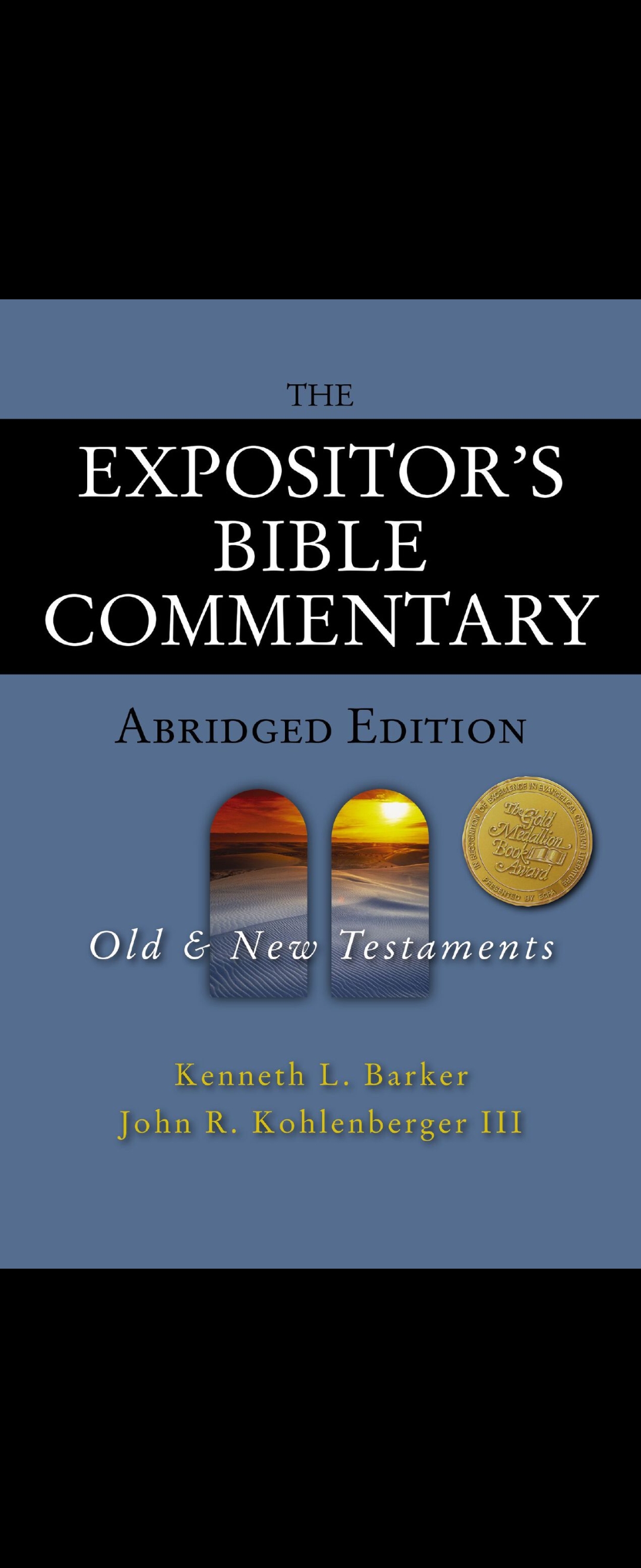
The second row includes three commentaries, and a fourth one is shown in the second image (Expositor’s Bible Commentary, which is on my phone). Of these, I have found the NIV Application Commentary to be the most helpful, primarily because it contains a short paragraph after each section (which may be a chapter or several chapters) on how to apply what the chapter/verses say. However, the Expositor’s Bible Commentary (I have one for the whole Bible, and a separate one for Romans – Galatians) contains more details and is helpful too.
In the bottom row, the IVP Bible Background commentaries contain information about the culture and beliefs and practices of other people groups (and how they compare to those of Israel). The bottom right book, Vine’s Expository Dictionary, contains more details than Strong’s concordance and is helpful for understanding key terms, such as faith and belief.
If I’m not finding much (or what I want) from a review of these commentaries, I’ll go to this site for more commentaries: https://studylight.org/commentaries.html.
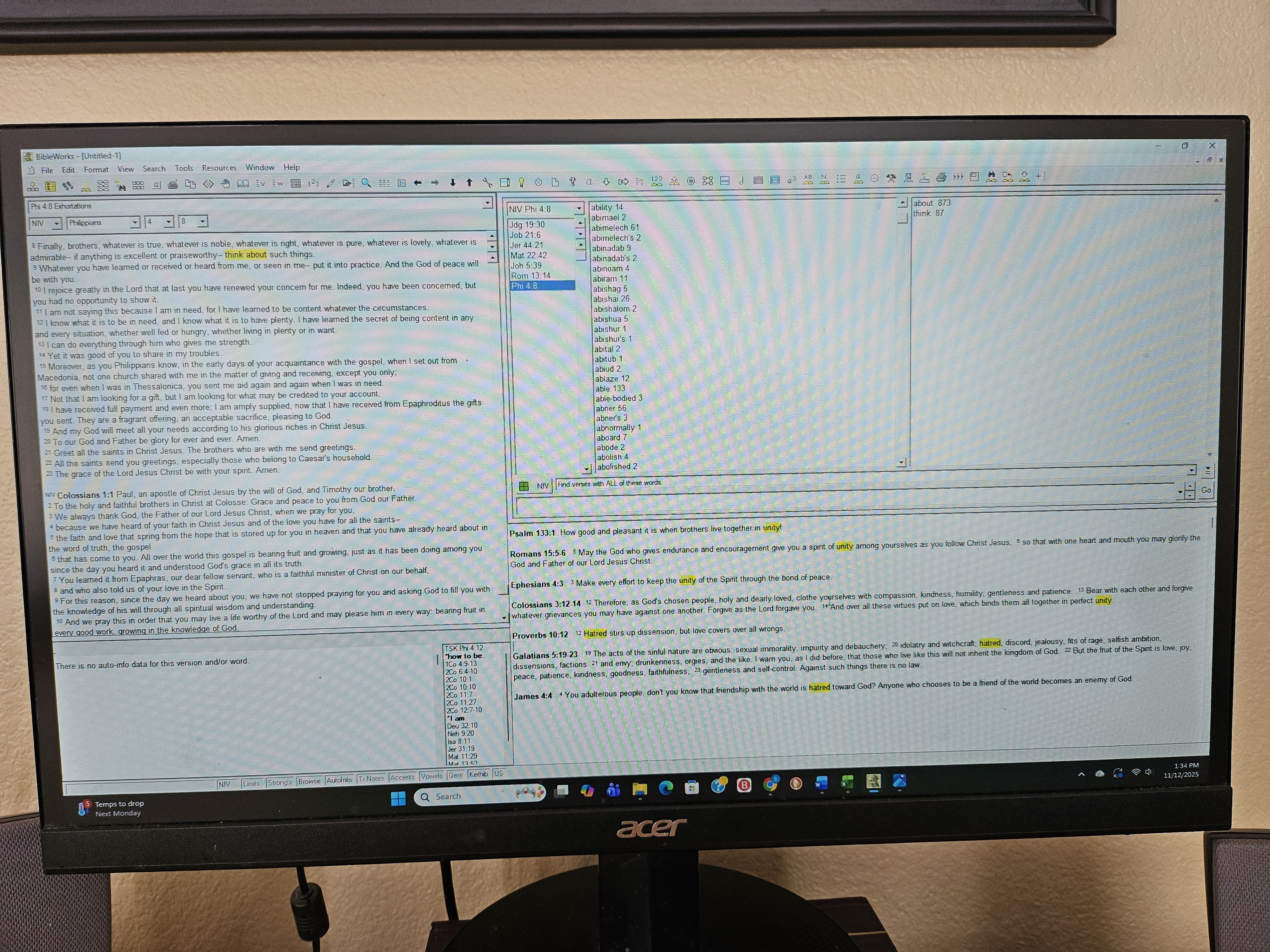
The third image is a picture of the BibleWorks software I’ve used for many years. This tool allows you to easily search for key terms and phrases throughout the Bible, and to understand what they mean using Strong’s concordance. For example, I just now searched for the word “baptism” using the NIV translation, and it shows up 20 times in the Bible. The word “love” is mentioned 551 times.
Process to Post
My decision on what to write about comes primarily from my daily reading of the Bible. For example, I recently read in Numbers about the fiery serpents and bronze snake on a pole, and realized that this picture of how people were physically saved can help us understand the process of salvation and meaning of faith in the New Testament. I hope to complete this post within the next week.
Also, I’m aware of several obstacles that are preventing some people from growing spiritually, so I’m researching these. One example is God’s anger and violence in the Old Testament (“Why would I want to love a God like this?”). This issue has taken me roughly three years to research (I’m currently reading the Old Testament – or most of it – for the fourth time to try to make even more sense of this topic), and hope to write 2-3 posts about it within the next several months. Another example is how to have joy in the midst of trials, and I’m learning that the key to this may be having fellowship with God (see 1 John), which is something most Christians may lack.
When I study a verse or chapter, I start with the NLT, and use my colored pencils to underline key words or verses. Green is for God, purple is for prayer, blue is for salvation, brown is for baptism, pink is for prophecy, and orange is for Christian living. I use a highlighter when something stands out to me.
After studying the verses or chapter in the NLT, and reading it’s notes, I periodically consult the other two translations and their notes. Then, I’ll turn to the commentaries to see if they shed more light on what I’m studying.
After I complete a rough draft of a post, I’ll show it to my wife so she can point out any glaring grammatical errors, and then I too often hit the “post” button without waiting another day to review the post once more before finalizing it, as I want to move on to the next post. The problem with this, though, is that I nearly always find a few mistakes, or wish I would have said something more clearly, so then I’ll revise my post, but the subscribers who receive automatic emails of my posts do not benefit from this.
I typically do most of my research from 4:30 – 6:00 am. I’ll do a little more in the late afternoon or early evening. I’m typically in bed by 8:30 or 9:00 pm, which allows me to arise around 4:30 am to start my day. It’s not really what I want – it’s just I can’t sleep any longer in the morning, and I can’t stay awake any later in the evening.
So, in case you wanted to know, now you do…
 Salvation Summaries
Leave a comment