In recent months, I have read six books on prayer (Dialogue with God, Prayer: Conversation with God, Prayer, Experiencing Prayer with Jesus, Touching Heaven by Prayer, and How to Pray) and posted summaries on the first three. This post summarizes my review of the fourth book, Experiencing Prayer with Jesus.
I do not plan to write a post on the fifth book (Touching Heaven by Prayer), but will likely on the sixth (How to Pray), as it is probably the best book I’ve read thus far on prayer (though none have been as good as I hoped they would be). However, that will be several months from now for reasons I’ll mention later in this post.
Review of Prayer Book #4: Experiencing Prayer with Jesus
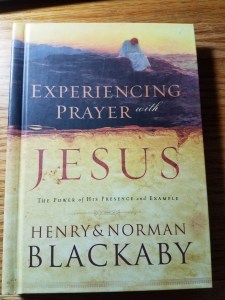
This book was written by Henry and Norman Blackaby in 2006. It is 158 pages long.
Summary
The authors sought to address a problem most Christians have, which is a lack of victory and effectiveness in their prayer life. Their solution is for Christians to emulate Jesus’ prayer life with His Father, for this is what the Father desires in us. An effective prayer life is one where a person understands the Father’s will and out of obedience adjusts his/her life to do it. This is the pattern Jesus followed, and so should we. The authors’ most commonly referenced Bible verse is Hebrews 5:7.
Although I previously read Blackaby’s book Experiencing God and enjoyed it, I would not recommend this book on prayer. Why? In my opinion, the authors do not accurately portray Jesus’ deity (they seem to overemphasize His humanity and downplay his deity), and they made too many questionable/speculative/exaggerated comments that overshadowed the positive contributions on prayer this book made.
What I liked about this book and found helpful
- I learned much more about Jesus’ prayer life – He often went into the wilderness and prayed (Luke 5:16). He prayed early in the morning (Mark 1:35). Before selecting His 12 disciples, Jesus spent the prior night in prayer (Luke 6:12). In the garden the night before His crucifixion, Jesus prayed with vehement cries and tears. During his baptism, He prayed.
- Our prayer requests should seek to glorify God (John 14:13, 15:7-8) – This was one of the most helpful points the authors made. In most of my prayers, I have focused far too much on my desires and needs, and paid little attention to what would glorify God. How sinful of me! I have begun to incorporate this into my prayers and have started to see some encouraging signs.
- Reverent submission should be our attitude when we pray – The authors cite a verse about Jesus’ prayer being heard because of His piety, or reverent submission. We might need to have the same attitude for our prayers to be heard and answered.
- We should pray to be kept from temptations – I hadn’t thought much about this before, but it’s in the Lord’s prayer. If you feel like you might be tempted to sin, pray in advance for protection from it.
- The author addressed parts of the Lord’s prayer – One common criticism I’ve had in the other prayer books I have read is their failure to evaluate the Lord’s prayer and discuss whether we should use it as a model in how we pray. The authors addressed the parts about God’s kingdom being done on earth, our daily bread and need to forgive others.
What I did not like about this book
- Restricted definition of prayer – Per the author, prayer is an invitation to enter God’s throne room so He can lay His agenda on our hearts; it is not for us to get God to help us. While I believe too many Christians focus too little on seeking to do God’s will as a component of their prayer, I do not believe it is wrong for Christians to also seek God’s mercy (especially during times of stress, confusion and pain) as part of their prayer.
- Too much emphasis on Jesus’ humanity; not enough on His deity – The authors have a different understanding than me on Jesus’ humanity vs. deity while He was on earth. They portray Him as fully human but with limited deity. In essence, each day Jesus could not decide or do anything on His own without first receiving the Father’s instruction and strength, which He obtained solely by prayer. Also, Jesus had to adjust His plans each day to conform to what the Father wanted.
- Too many questionable/speculative/exaggerated comments – see examples below.
- Misapplication of Jeremiah 29:11-13 – The authors believe that these verses (For I know the plans I have for you,” declares the LORD, “plans to prosper you and not to harm you, plans to give you hope and a future. Then you will call upon me and come and pray to me, and I will listen to you. You will seek me and find me when you seek me with all your heart.) apply to us today in the same way they applied to the Israelites in Jeremiah’s days, but I do not agree. These comments were directed towards a particular group of people in a particular situation at a specific point in history. Also, verse 14 goes on to say “I will restore your fortunes and will gather you from all the nations…”, which obviously would not apply to us today. However, I believe the principle in verse 13 (God can be found in you seek Him with your whole heart) can apply to us as it is more general in nature.
- Authors apparently assume that most Christians hear God speaking to them when they pray and receive specific guidance from Him – I would love it if this happened to me when I prayed, but thus far it has not and it’s my impression that most other Christians are in the “same boat” I am (hence my desire to better learn how to pray and to help you do the same!). Here are some examples:
- “What is the last thing God said to you when you prayed?
- “Are you staying long enough in the Father’s presence to allow Him to reveal to you His ways, truths, understanding and agenda?”
- We need to discover God’s plans and purposes from prayer. “What is He speaking to you about?”
- “God knows what your day holds and He’ll instruct you before you face difficult situations.”
- “God will provide daily guidance” for us.
Examples of Questionable/Speculative/Exaggerated Comments (italics are mine)
- “Jesus was convinced that His own life and ministry depended upon His prayer life with the Father.”
- “Jesus was intensely committed to prayer because this loving presence of the Father was His very life.” Prayer was Jesus’ lifeline.
- We have seen how Jesus had a habit of strategically going alone into a solitary place to pray and receive daily instruction.
- “It was a closeness that found expression in His constant time alone with the Father in prayer.”
- “Every time Jesus entered His Father’s presence, the Father opened His Son’s understanding to what the Father was doing so that Jesus could immediately adjust His life to it, and the Father could continue to accomplish His purposes through Him.”
- “Jesus’ entire life was patterned by daily adjustments to the Father’s will.”
- The author gives the impression that Jesus regularly prayed with vehement cries and tears. While they (disciples) waited for the coming of the Holy Spirit, they followed their Lord’s example of crying out to the Father.”
- Jesus knew that only by watching and praying would they (Peter, James and John, or all of the disciples) avoid spiritual disaster.
- The authors said that one morning when Jesus rose early to pray, the Father told Jesus at that time which town He should travel to.
- “The Father had summoned Him to prayer because He wanted Jesus to know what He, the Father, had accomplished in the lives of the disciples. In this time of prayer, the Savior received certain questions to ask the 12. The Father told the Son to ask them so that Jesus could witness the disciples’ conviction about His identity.”
- “If we listen, we may hear the Lord telling us what He told Job, when He said…’Where were you when I created the worlds.’”
A Change of Plans
At the start of this year, I had planned to read 10-12 books on prayer and post a review of each one, then look up all verses in the Bible on prayer and summarize what I learned from that. However, after reading six books, I don’t plan to read any more in the near future, and instead will jump to the Bible verses. Why? Let me illustrate with a short analogy.
Many years ago when I was in late junior high school or early high school, I bought an 8-track tape of the soundtrack to the movie Grease. When I was in the store looking at the tape and determining whether to buy it, I knew it might not be the original soundtrack, and instead include songs sung by other artists, but I hoped I was wrong and allowed my excitement to let me to buy it. When I got home and began to listen to the tape, I was disappointed to learn that it wasn’t by the original artists (even though the singers were good) and thus not what I had hoped it would be.
With each of the books on prayer that I’ve read thus far, I started out with excitement, hoping to learn “the secret of praying” and improve my prayer life. However, not long after starting to read each one I became disappointed, as the book did not increase my understanding of prayer nor improve my prayer life near as much as I hoped it would. At this point, I simply need to go to the original source (Bible) and spend my time analyzing its verses on prayer, for I know I won’t be disappointed from it.
Answers to Questions from a Study of Bible Verses on Prayer
So, you might be asking, “Well, what you are looking for in a book on prayer that these prayer books have not adequately addressed?” Glad you asked.
Here are the main questions I want answers to from reading any book on prayer, and the ones I intend to answer from my study of Bible verses on prayer:
- Lord’s prayer – What can we learn from the Lord’s Prayer? Should it be a model or framework for our prayers? Should we recite the Lord’s prayer each day? Should this not be the starting point for all Christians in learning how to pray?
- Prayers in the Psalms – What can be learned from the prayers in the Psalms? Do they follow a certain structure or have certain elements in common (description of God and/or His promises, evidence of faith/trust, intensity or emotion, personal rather than formal style, etc.)? How many types are there?
- Old Testament vs. New Testament prayers – How did the Old Testament prophets pray? Did their prayers follow a certain format? How do NT apostles pray, adn to what extent did their prayers differ from those in the Old?
- Recipient of our prayers – Who should we pray to? To the Father only? To Jesus? What about the Holy Spirit? Is it more appropriate to begin with “Our Father” (as with the Lord’s prayer) than Dear Lord or Dear God?
- Praying with faith – What role does faith play in a person’s prayer life?
- Praying with emotion – Jesus prayed with “vehement cries and tears” in the garden of Gethsemane before his crucifixion, and a number of prayers in the Psalms reflect strong emotion. Should we be praying with more intensity and emotion? Are we too lazy in our prayer life?
- Unanswered prayers – What are some examples of prayers in the Bible that went unanswered for a long time, and why did that happen? What would be some reasons why some of our prayers are not answered – lack of faith, sin? If sin hinders our prayers, should we confess them before we pray even though we’ve been forgiven?
- Praying without ceasing – How does one do this? What does it look like?
- How to end our prayers – Where did the phrase “in Jesus name” come from? Should we end our prayers with this? If we don’t, are our prayers less likely to be answered? Also, do we need to say “amen” at the end of our prayer?
 Salvation Summaries
Leave a comment